


3rd LOGICT National IT Convention 2023 Booth Showcasing SCADA and Smart Grid by Our Former VP
- Flas Industries Inc.
- Jan 27, 2023
- 7 min read
Critical systems can sound distant until people see how they work. A power grid, a water facility, or an industrial plant may involve sensors, controllers, networks, operators, and safety rules, but the basic idea is clear when the right story is placed in front of visitors.
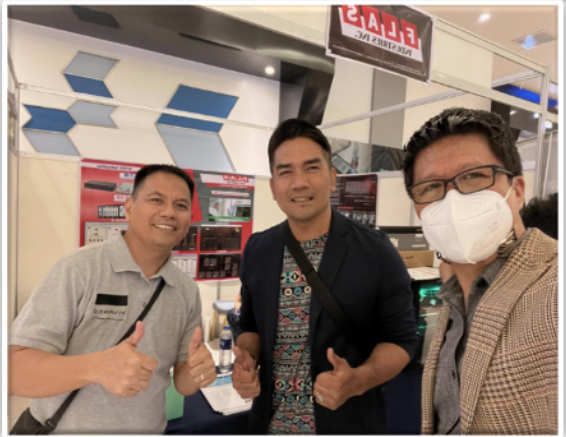
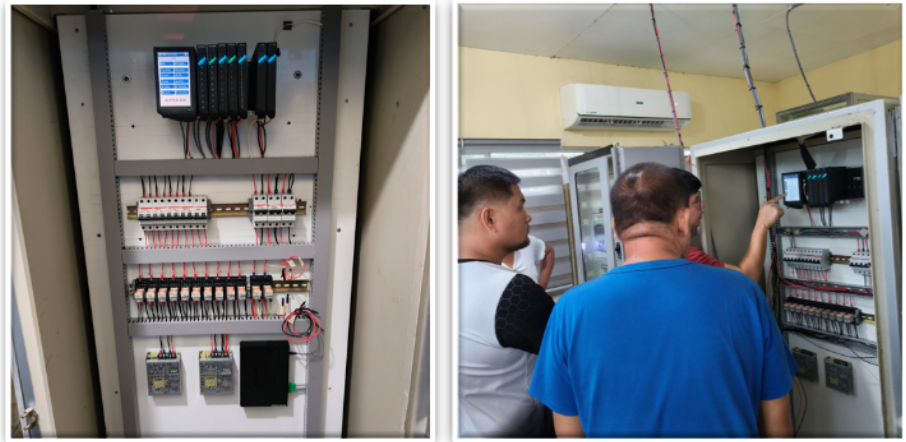
That was the purpose of our booth at the 3rd LOGICT National IT Convention 2023. We created an exhibit around SCADA and Smart Grid concepts, based on a topic previously presented by our former Vice President. The goal was to turn a technical discussion into something people could observe, ask about, and connect to real-world use.
Rather than treating SCADA and Smart Grid as abstract terms, the booth framed them as systems that help people monitor, control, and make better decisions about essential services. It gave visitors a practical look at how information technology supports power, utilities, and infrastructure.
Why we built the booth around SCADA and Smart Grid
SCADA stands for Supervisory Control and Data Acquisition. At its simplest, it is a system used to monitor and control equipment across a facility or network. It can collect readings from sensors, show alerts, send commands, and help operators respond quickly.
A Smart Grid builds on that idea in the power sector. It uses digital communication, sensors, automation, and data to manage electricity more intelligently. While a traditional grid mainly sends electricity in one direction, a Smart Grid gives operators more visibility into supply, demand, outages, and changing conditions.
For an IT convention, these topics made sense. They sit at the meeting point of software, hardware, networking, cybersecurity, engineering, and public service. They also show that information technology is not limited to apps, websites, or office systems. IT also helps run the infrastructure people depend on every day.
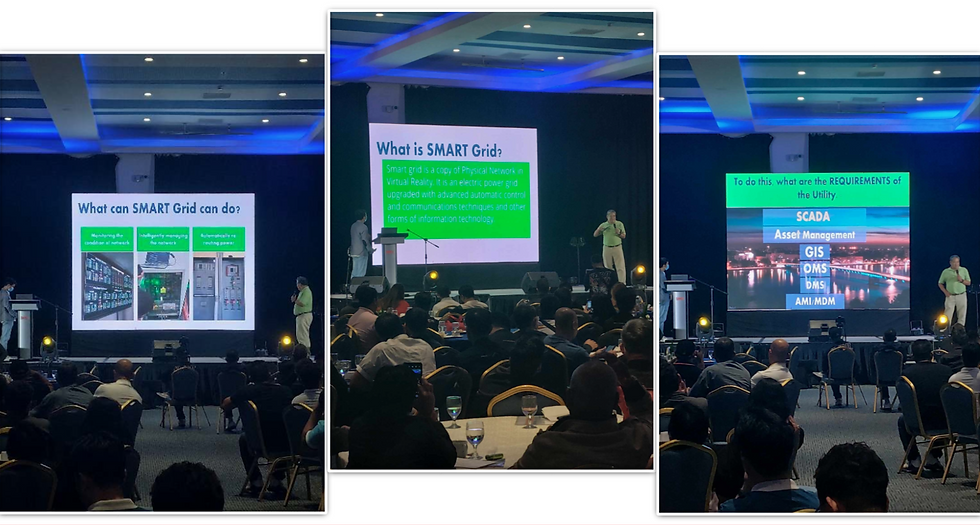
Our former VP had already presented on SCADA and Smart Grid, so the booth became a natural extension of that learning. The presentation gave the core ideas. The booth gave those ideas a physical space.
Visitors could move from hearing the theory to seeing how the parts relate:
sensors gather data from the field
controllers process signals and commands
networks move information between devices
displays help operators understand the system
alerts guide people toward the right response
That simple chain helped make the topic approachable. It also showed why good system design matters when technology is connected to real operations.
How the former VP’s presentation shaped the exhibit
The booth did not start from zero. It grew from the earlier work of our former Vice President, who presented the topic of SCADA and Smart Grid before the event. That presentation gave the team a clear base to build from.
The booth focused on the same central question: how can IT systems help monitor and manage important infrastructure?
To answer that question well, the exhibit had to do more than display terms. It needed to guide visitors through a process. A visitor should be able to look at the booth and understand what happens from the moment a field device captures data to the moment a person or system acts on it.
The presentation helped define the flow:
A device in the field detects a condition.
The data moves through a communication path.
A central system receives and displays the data.
The system may raise an alert or show a change.
An operator or automated process responds.
That flow became the story of the booth.
It also helped the team decide what to explain first. Starting with technical terms can lose people quickly. Starting with a familiar problem works better. For example, a power interruption, a change in load, or a sensor reading outside the expected range gives visitors a reason to care. Once the problem is clear, SCADA and Smart Grid become easier to explain.

What visitors could learn from the booth
A good booth does not overload people. It gives them enough to become curious, then it opens the way for questions. Our SCADA and Smart Grid booth aimed to do that by breaking the subject into clear parts.
SCADA is about visibility and control
Many facilities have equipment spread across different locations. It is not practical for people to check every device manually all the time. SCADA helps by bringing data into one place, where operators can monitor conditions and respond.
A SCADA system may show readings such as voltage, temperature, pressure, water level, flow rate, or equipment status. The exact readings depend on the system. In a power-related setup, it may show conditions from substations, switches, or meters. In water or manufacturing, it may focus on pumps, tanks, valves, and machines.
The booth helped visitors see that SCADA is not one device. It is a connected system with several parts working together.
Smart Grid adds communication to power systems
A Smart Grid uses digital tools to improve how electricity is monitored and managed. It can help detect issues, support faster response, and give operators better information. It can also support modern energy needs, including distributed energy sources and changing demand patterns.
For the Philippines, this topic is especially relevant as communities, campuses, businesses, and utilities think about reliability, energy use, and future-ready infrastructure. The country’s geography also makes energy planning a serious topic, since islands and local conditions can affect how power systems are built and maintained.
The booth did not claim to solve those challenges in one display. It simply showed why smarter monitoring and communication matter.
Why the booth format worked for a technical topic
Some topics are easier to understand when they are spoken. Others need a diagram. SCADA and Smart Grid need both. They also benefit from a physical layout, because the topic involves movement: data moves, power moves, commands move, and decisions move through the system.
The booth made that movement visible.
A visitor could start at a model of a field device, then follow the path toward a controller, a communication link, and a monitoring area. Even if the setup was simplified, the concept became easier to grasp. The point was not to recreate a full industrial system. The point was to show the logic behind one.
This kind of exhibit also encourages better questions. Instead of asking only “What is SCADA?”, visitors can ask:
What happens when a sensor fails?
Who decides when to send a command?
Can a system respond automatically?
How does the network stay secure?
What makes a grid “smart”?
Those questions show real understanding. They also turn the booth from a display into a learning space.

The connection between IT and real infrastructure
One of the most useful parts of the booth was the way it placed IT in a broader role. Many people first encounter IT through computers, mobile devices, websites, or school systems. Those are important, but IT also supports the systems behind daily life.
SCADA and Smart Grid show that connection clearly.
A monitoring screen is not just a screen. It represents field data, device status, network communication, and operational decisions. A sensor reading is not just a number. It may help detect a problem before it becomes worse. A command from a control system is not just a click. It can affect a physical process.
That is why these systems require careful design. They need reliability, security, clear interfaces, and people who understand both technology and operations.
The booth also highlighted the value of teamwork. SCADA and Smart Grid projects are not handled by one type of professional alone. They can involve IT specialists, electrical engineers, network administrators, cybersecurity staff, operators, planners, and educators. A convention booth can introduce those links in a simple way.
What the team gained from creating the booth
Building the booth was also a learning experience for the team. Preparing a display forces people to explain a topic clearly. If the explanation is too complicated, visitors may miss the point. If it is too simple, the topic loses meaning.
The team had to find the right balance.
That meant choosing which details to include, which diagrams to simplify, and which examples would make sense to convention visitors. It also meant respecting the technical depth of the subject without turning the booth into a long lecture.
The earlier presentation by our former VP helped keep the booth focused. It gave the team a strong starting point and a message to carry forward. The booth then added a public-facing layer, allowing more people to engage with the topic in a hands-on way.
The process showed that a strong technical idea can grow through collaboration. A presentation can become a booth. A booth can become a conversation. A conversation can spark interest in systems that many people use but rarely see.
Why SCADA and Smart Grid deserve space in IT events
National IT conventions are valuable because they widen the view of what technology can do. They bring together topics from software, networks, education, infrastructure, data, and security. SCADA and Smart Grid belong in that mix.
They remind participants that IT has real-world reach.
A well-designed monitoring system can help people see what is happening across a facility. A secure communication system can protect important operations. A smarter power grid can support better awareness and response. These are not small ideas. They affect how communities function.
For students and young professionals, exposure to these topics can also open new paths. Industrial control systems, utility technology, automation, and energy systems all need people who can think across fields. Someone with a background in IT may find a future role in cybersecurity for industrial networks, data monitoring, system integration, or control room support.
A booth cannot teach everything. It can, though, create the first moment of interest. That first moment matters.
Takeaways from our convention booth
Our booth at the 3rd LOGICT National IT Convention 2023 gave us a chance to share a topic that connects technology with public infrastructure. By building on the SCADA and Smart Grid presentation of our former VP, we turned a technical discussion into an exhibit that visitors could explore.
The main takeaway was simple: technology becomes more meaningful when people can see how it supports real systems.
SCADA shows how monitoring and control help manage equipment across different locations. Smart Grid shows how digital communication can improve the way power systems are understood and managed. Together, they show how IT can support safety, reliability, and better decision-making.
The booth was more than a display. It was a bridge between a presentation and public learning. It helped explain a complex topic in a way that encouraged questions, curiosity, and appreciation for the systems working behind everyday life.
Comments